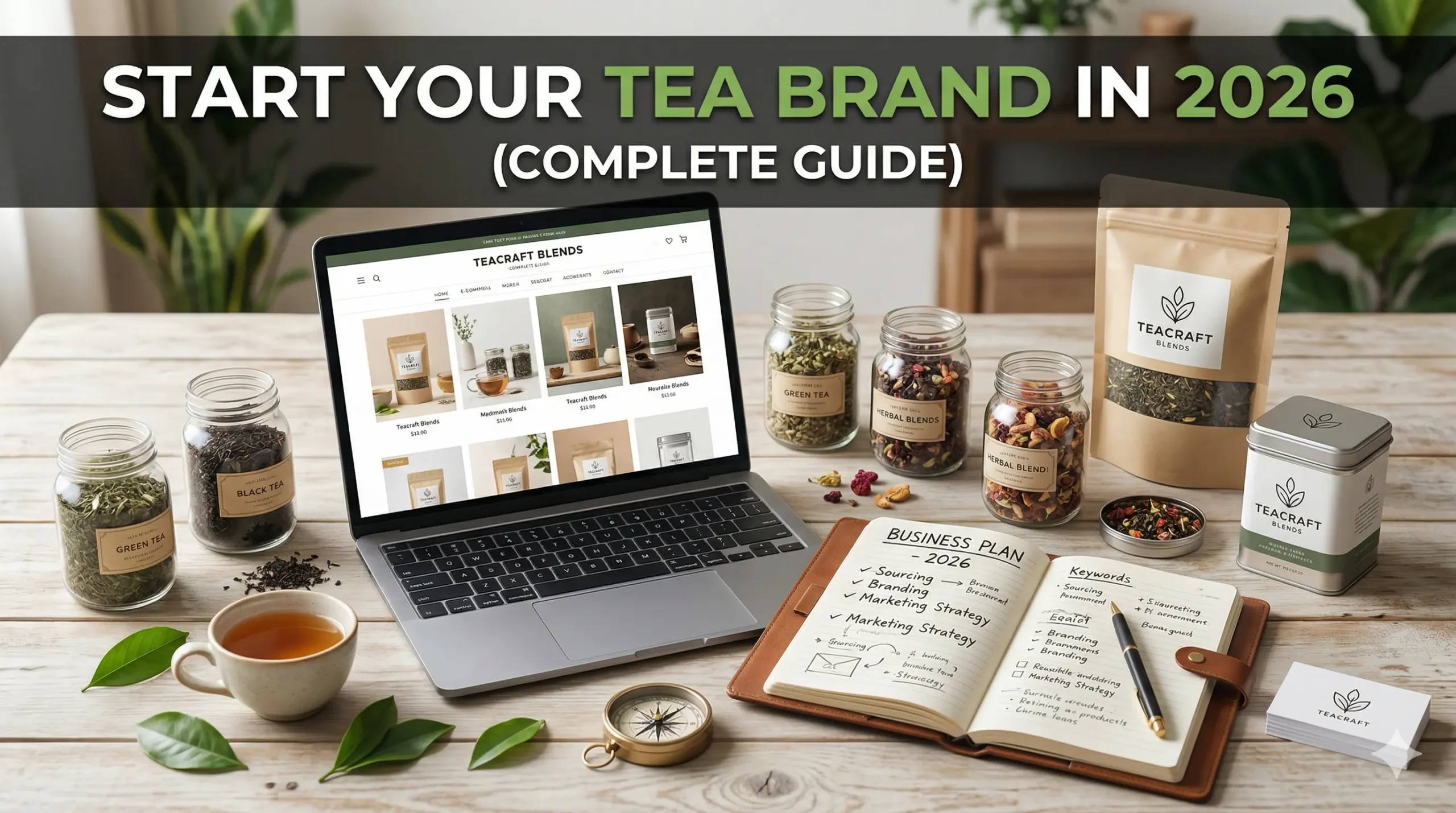
How to Start Your Own Tea Brand: A Complete Guide (2026)
If you’re planning to start your own tea brand in 2026, you’re entering one of the fastest-growing segments in the global beverage industry. With rising demand for premium, herbal, and wellness teas, the tea business has evolved from a traditional commodity into a high-margin, lifestyle-driven category.
The global tea market is projected to surpass $90 billion by 2027, driven by increasing consumer interest in health, sustainability, and premium experiences. Whether you’re an entrepreneur, retailer, or distributor, this is the perfect time to build a successful tea brand.
Why 2026 is the Best Time to Start Your Own Tea Brand
There has never been a better time to start your own tea brand, and here’s why:
- Rising Demand: Tea is the second most-consumed beverage globally
- Health & Wellness Boom: Herbal and functional teas are growing at a 6–8% CAGR
- E-commerce Growth: Direct-to-consumer brands are scaling faster than ever
- Premiumization Trend: Customers are willing to pay more for quality and branding
👉 Consumers are shifting from generic tea to branded, premium, and purpose-driven products.
How to Start Your Own Tea Brand: Step-by-Step Process
Building a tea brand requires a strategic approach. Here’s a complete roadmap:
Step 1: Define Your Brand Concept
Before sourcing tea, define your brand clearly.
Ask Yourself:
- Who is your target audience? (Luxury, wellness, mass market)
- What is your niche? (Organic, herbal, gifting, functional teas)
- What makes your brand different?
Popular Niches in 2026:
- Detox & wellness teas
- Luxury loose-leaf teas
- Organic & sustainable tea
- Functional teas (sleep, immunity, energy)
- Premium tea gift boxes
💡 Brands with a clear niche grow 2–3x faster than general brands.
Step 2: Choose the Right Tea Products
Your product selection is critical when you start your own tea brand.
High-Demand Categories:
- Black Tea (Assam, Darjeeling)
- Green Tea (antioxidant-rich)
- Herbal Tea (caffeine-free wellness blends)
- Specialty Blends (Masala chai, floral, fruit infusions)
2026 Trends:
- Immunity-boosting blends
- Adaptogenic teas (ashwagandha, tulsi)
- Functional teas with health benefits
👉 Start with 3–5 products (SKUs) to test the market instead of launching a wide range.
Step 3: Partner with a Reliable Tea Supplier
A strong supplier is the backbone of your business.
When you start your own tea brand, your supplier should offer:
- Consistent quality
- Custom blending options
- Export and compliance support
Celestestate provides:
- Premium tea sourcing from India’s finest tea gardens
- Bulk tea supply for global markets
- Private label & white label solutions
- Export experience in 30+ countries
💡 Working with experts reduces risk and ensures faster market entry.
Step 4: Packaging & Branding Strategy
Packaging is what converts your product into a brand.
Packaging Options:
- Matte pouches (modern & cost-effective)
- Tin containers (premium look)
- Pyramid tea bags (luxury segment)
- Gift boxes (high-margin products)
Must-Have Label Details:
- Brand name & logo
- Ingredients
- Net weight
- Brewing instructions
- Barcode
- Certifications
2026 Trends:
- Eco-friendly packaging
- Minimalist luxury design
- Story-driven branding
👉 Good packaging can increase perceived value by 40–60%.
Step 5: Certifications & Compliance
To sell globally, compliance is non-negotiable.
Required Certifications:
- FSSAI (India)
- FDA (USA)
- Tea Board Certification
Additional Requirements:
- Ingredient transparency
- Country of origin
- Shelf life
💡 Proper compliance ensures smooth international shipping and builds trust.
Step 6: Logistics & Shipping
Efficient logistics are key when you start your own tea brand globally.
Shipping Methods:
- Air freight (fast but costly)
- Sea freight (cost-effective for bulk orders)
Consider:
- Import duties
- Transit time (15–45 days)
- Packaging durability
👉 Most bulk buyers prefer sea shipping for better margins.
Cost Breakdown to Start Your Own Tea Brand
Understanding costs is crucial before you start your own tea brand.
Main Cost Components:
- Tea sourcing
- Packaging
- Logistics
- Marketing
Estimated Margins:
- Retail brands: 50–70%
- Premium brands: Higher margins possible
💡 Focus on branding and value, not just low pricing.
Step 7: Build Your Sales Channels
To scale your tea business, diversify your channels.
Online:
- Your website (Shopify)
- Amazon / Etsy
- Social commerce
Offline:
- Distributors
- Retail stores
- Cafes & hotels
👉 Many successful brands start with D2C (Direct-to-Consumer).
Step 8: Marketing Your Tea Brand
Marketing turns your product into a recognizable brand.
Proven Strategies:
- SEO blogs (to drive organic traffic)
- Social media marketing (Instagram, TikTok)
- Influencer collaborations
- Email marketing
Content Ideas:
- Health benefits of tea
- Brewing guides
- Lifestyle content
👉 Businesses using content marketing generate 3x more leads.
Step 9: Work with Experts
Launching a tea brand involves multiple processes.
Instead of managing everything alone, partner with experts.
Celestestate offers:
- End-to-end private label solutions
- Custom tea blends
- Packaging support
- Global export assistance
With 30+ years of expertise, Celestestate helps brands launch faster and scale globally.
Final Thoughts
To start your own tea brand in 2026 is a powerful business opportunity with global potential. With the right strategy, supplier, and branding, you can build a profitable and scalable tea business.
Focus on:
- Strong brand positioning
- High-quality sourcing
- Premium packaging
- Effective marketing
Ready to Start Your Own Tea Brand?
Celestestate helps you transform your idea into a complete tea business—from sourcing and blending to packaging and global delivery.
Get in touch with us today and start your tea brand journey.